
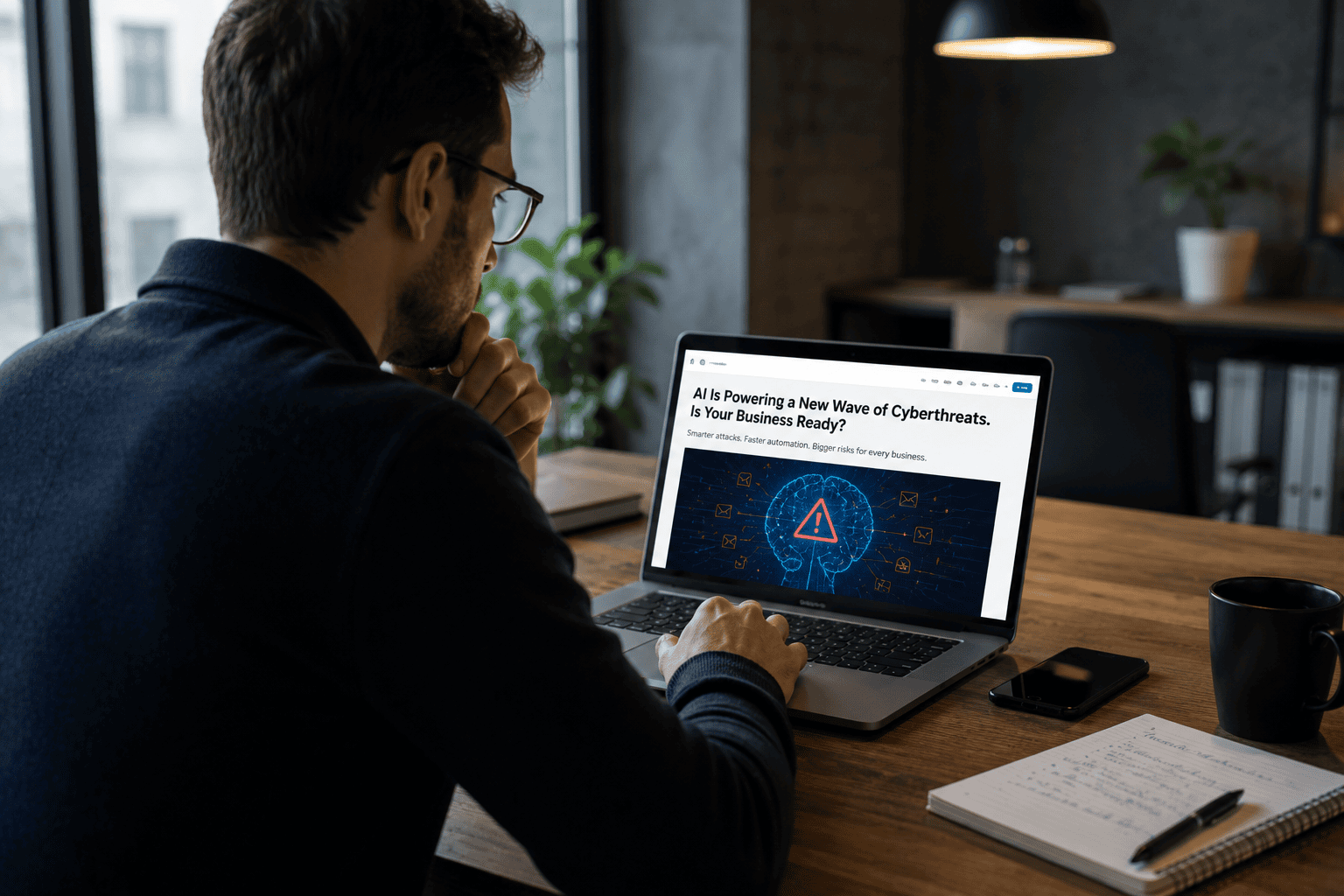
Can a cyberattack really impact a small business? Absolutely. As businesses become increasingly dependent on technology, cyberattacks and data breaches are a growing concern for businesses of all sizes, not just large corporations.
Small businesses often rely on email, cloud software, online payments, customer databases, and other digital systems every day. If those systems are compromised, financial losses, business interruptions, and recovery costs can add up quickly. Cyber insurance can provide an important layer of protection when a business experiences a covered cyber incident.
1. Why Are Cyberattacks Becoming More Common?
Modern businesses store more information digitally, conduct more transactions online, and rely on interconnected technology to operate. This creates more opportunities for cybercriminals to target businesses.
Small businesses can be particularly vulnerable because they may have fewer resources dedicated to cybersecurity than larger organizations.
Common cyber threats include:
-
Phishing and email scams
-
Ransomware attacks
-
Data breaches
-
Stolen login credentials
A cyberattack doesn’t have to involve a major corporation to cause serious damage. An attack on a small business can disrupt operations, expose customer information, and create unexpected expenses.
2. What Is Cyber Insurance?
Cyber insurance is designed to help businesses respond to certain cyber-related incidents, including data breaches, ransomware attacks, and other security or privacy events.
Depending on the policy, cyber insurance may help cover the business’s own expenses as well as certain costs associated with claims made by customers or other third parties.
As businesses move more of their operations online, cyber insurance is becoming an increasingly important consideration.
3. What Can Cyber Insurance Help Cover?
Depending on the policy, cyber insurance may help cover expenses such as:
-
Data breach response and investigation
-
Legal and regulatory expenses
-
Customer notification and credit monitoring
-
Data and system recovery
Coverage limits, deductibles, exclusions, and conditions vary by insurance company and policy.
4. How Can Small Businesses Reduce Cyber Risk?
Cyber insurance is only one part of an effective risk-management strategy. Businesses should also take steps to prevent cyberattacks and limit potential damage.
Important precautions can include:
-
Using strong, unique passwords and multi-factor authentication
-
Regularly backing up important data
-
Keeping software and security systems up to date
-
Training employees to recognize phishing and other scams
No security system can eliminate every cyber risk, but preventative measures can help reduce the likelihood and impact of an incident.
The Bottom Line
Cyberattacks are no longer simply a concern for large corporations and technology companies. As businesses of all sizes become more dependent on digital systems, cyber risk has become an increasingly important part of modern business planning.
Cyber insurance can provide an additional layer of financial protection following a covered cyber incident, while strong cybersecurity practices can help prevent and minimize potential losses.
If your business stores customer information, relies on technology, accepts online payments, or conducts business online, it may be worth reviewing whether your current insurance program provides the protection you need.
If you have questions about cyber insurance or would like to review your current business coverage, Georgetown Insurance Agency is here to help.


