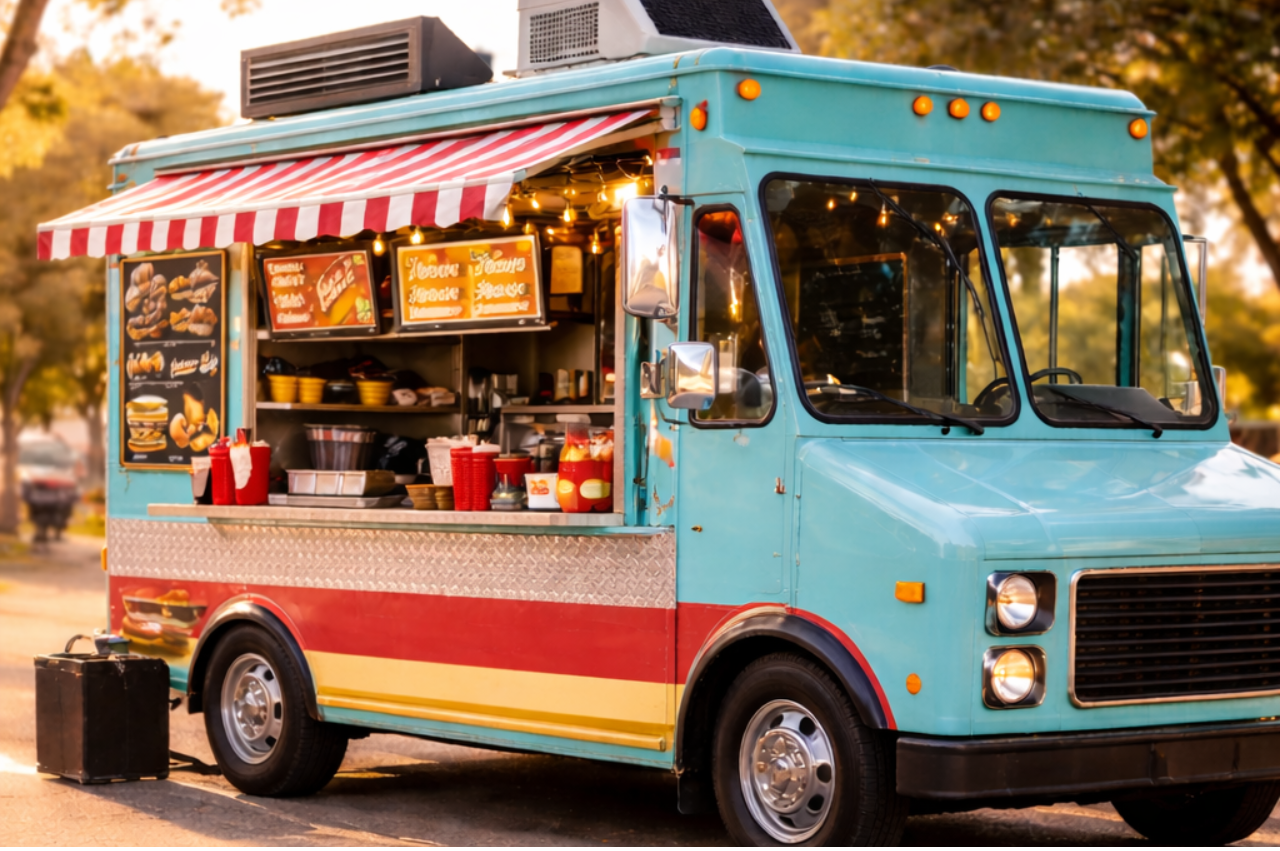
Food truck insurance is a specialized type of coverage designed to protect your business, your equipment, and your liability while operating on the road or at events, helping cover risks like accidents, injuries, property damage, and equipment loss.
Insurance companies require this because food trucks combine multiple exposures: a vehicle, a commercial kitchen, and customer interaction. Without the right coverage, one incident could lead to major financial loss.
1. What Is Food Truck Insurance?
Food truck insurance is a combination of different coverages built specifically for mobile food businesses.
It typically includes protection for:
-
Your truck (as a commercial vehicle)
-
Cooking equipment and inventory
-
Liability if someone is injured or property is damaged
-
Business operations at different locations or events
Because food trucks are both a vehicle and a business, personal auto policies do not apply.
2. Why Is Food Truck Insurance Necessary?
Operating a food truck comes with unique risks that standard policies don’t cover.
This includes:
-
Driving to and from locations
-
Cooking with hot equipment, grease, and open flames
-
Serving customers in public spaces
-
Working at events that may require proof of insurance
In many cases, cities, event organizers, or commissary kitchens require proof of insurance before allowing you to operate.
3. What Does Food Truck Insurance Cover?
Food truck insurance is usually made up of several key coverages:
-
Commercial Auto Insurance: Covers accidents involving your truck while driving
-
General Liability Insurance: Covers injuries or property damage involving customers
-
Equipment Coverage: Protects cooking equipment, generators, and tools
-
Property Coverage: Covers inventory like food and supplies
-
Workers’ Compensation: Required if you have employees
Each policy can be customized depending on how and where you operate.
4. When Does Coverage Apply?
Coverage can apply in several situations, depending on the policy:
-
While driving to or from a location (commercial auto)
-
While parked and serving customers (general liability)
-
If equipment is damaged, stolen, or breaks down (equipment/property coverage)
-
If a customer becomes ill or is injured (liability coverage)
It’s important that your policy reflects your full operation—both on the road and while serving.
5. Common Gaps to Avoid
Many food truck owners run into issues when they are not properly insured.
Common gaps include:
-
Relying on a personal auto policy instead of commercial auto
-
Not having enough liability coverage for events
-
Missing coverage for expensive kitchen equipment
-
Not listing additional insureds when required by venues
These gaps can lead to denied claims or out-of-pocket costs.
The Bottom Line
Food truck insurance is essential for protecting your business from the unique risks that come with operating a mobile kitchen. Having the right combination of coverage ensures you’re protected both on the road and while serving customers.
If you own or are starting a food truck, Georgetown Insurance Agency can help review your operation and make sure your coverage is set up correctly so you can focus on running your business with confidence.